Your 4th generation Tacoma is designed as a utility vehicle with specific characteristics optimized for off-road capability. Understanding your truck's capabilities and limitations helps you operate it safely in off-road environments. This guide consolidates Toyota's official precautions with community insights to help you get the most from your Tacoma while staying safe.
(Reference: Owner's Manual, pg. 436-438)
This vehicle belongs to the utility vehicle class, which has higher ground clearance and narrower tread in relation to the height of its center of gravity to make it capable of performing in a wide variety of off-road applications.
Design Characteristics:
Specific design characteristics give it a higher center of gravity than ordinary passenger cars. This vehicle design feature causes this type of vehicle to be more likely to rollover. Utility vehicles have a significantly higher rollover rate than other types of vehicles.
An advantage of the higher ground clearance is a better view of the road allowing you to anticipate problems. However, it is not designed for cornering at the same speeds as ordinary passenger cars any more than low-slung sports cars are designed to perform satisfactorily under off-road conditions. Therefore, sharp turns at excessive speeds may cause the vehicle to rollover.
WARNING: Off-road vehicle precautions
Always observe the following precautions to minimize the risk of death, serious injury or damage to your vehicle:
Rollover Prevention:
In a rollover crash, an unbelted person is significantly more likely to die than a person wearing a seat belt. Therefore, the driver and all passengers should always fasten their seat belts.
Vehicle Control:
Avoid sharp turns or abrupt maneuvers, if at all possible. Failure to operate this vehicle correctly may result in loss of control or vehicle rollover causing death or serious injury.
Load Management:
Avoid loading any items on the roof that will raise the vehicle's center of gravity.
Weather Conditions:
Always slow down in gusty crosswinds. Because of its profile and higher center of gravity, your vehicle is more sensitive to side winds than an ordinary passenger car. Slowing down will allow you to have better control.
Terrain Navigation:
Do not drive horizontally across steep slopes. Driving straight up or straight down is preferred. Your vehicle (or any similar off-road vehicle) can tip over sideways much more easily than forward or backward.
Risk Assessment:
Drive carefully when off the road. Do not take unnecessary risks by driving in dangerous places.
Steering Technique:
Do not grip the steering wheel spokes when driving off-road. A bad bump could jerk the wheel and injure your hands. Keep both hands and especially your thumbs on the outside of the rim.
Post-Terrain Checks:
Always check your brakes for effectiveness immediately after driving in sand, mud, water or snow.
Underbody Inspection:
After driving through tall grass, mud, rock, sand, rivers, etc., check that there is no grass, bush, paper, rags, stone, sand, etc. adhering or trapped on the underbody. Clear off any such matter from the underbody. If the vehicle is used with these materials trapped or adhering to the underbody, a breakdown or fire could occur.
Terrain Operation:
When driving off-road or in rugged terrain, do not drive at excessive speeds, jump, make sharp turns, strike objects, etc. This may cause loss of control or vehicle rollover causing death or serious injury. You are also risking expensive damage to your vehicle's suspension and chassis.
NOTICE: To prevent water damage
Take all necessary safety measures to ensure that water damage to the engine or other components does not occur.
Engine Protection:
Water entering the engine air intake will cause severe engine damage.
Transmission Protection:
Water entering the automatic transmission will cause deterioration in shift quality, locking up of your transmission accompanied by vibration, and ultimately damage.
Drivetrain Protection:
Water can wash the grease from wheel bearings, causing rusting and premature failure, and may also enter the differentials, transmission and transfer case, reducing the gear oil's lubricating qualities.
Water Crossing Procedure:
When driving through water, such as when crossing shallow streams:
Why disable Stop & Start? The Stop & Start system could shut down the engine mid-crossing, which would be catastrophic. This is a critical 4th Gen Tacoma-specific step.
After crossing, always check your brakes for effectiveness immediately.
When driving your vehicle off-road, observe the following precautions to ensure your driving enjoyment and to help prevent the closure of areas to off-road vehicles:
Where to Drive:
Additional Resources:
For owners in U.S. mainland, Hawaii and Puerto Rico, to obtain additional information pertaining to driving your vehicle off-road, consult the following organizations:
Brake System Check:
Sand and mud that has accumulated around brake discs may affect braking efficiency and may damage brake system components.
Maintenance Inspection:
Always perform a maintenance inspection after each day of off-road driving that has taken you through rough terrain, sand, mud, or water. For scheduled maintenance information, refer to the "Scheduled Maintenance Guide" or "Owner's Manual Supplement".
Stabilizer Disconnect Mechanism (SDM):
The SDM allows 10 percent more flex than the outgoing 3rd generation truck. Push a button, and the actuator unlocks, allowing the two halves of the stabilizer bar to move independently for better wheel articulation on uneven terrain.
Important: While SDM improves articulation for better tire contact, it does not change the fundamental rollover physics. The warning about not driving horizontally across slopes remains absolute, regardless of SDM engagement.
Source: Toyota USA Newsroom
4WD System Usage:
The Tacoma four-wheel drive system allows you to switch to 4H at speeds up to 62 mph (100 km/h). However, 4H should only be used off-road or on snow/ice covered pavement.
Source: Canadian Gearhead
Safety System Evolution:
Beginning with the 2009 model year, all Tacomas feature Toyota's Star Safety System which added Vehicle Stability Control (VSC) and traction control. In 2008, a rollover sensor was added which would deploy the side curtain airbags in the event of rollover. The 4th Gen Tacoma builds on these safety foundations with enhanced systems.
Source: Historical Toyota data
Mistake 1: Using 4Hi on Dry Pavement
Driving around town on dry roads in 4H can be hard on tires and drive train. You should avoid using 4hi (and lo) on pavement and tight turns.
Why it matters: The transfer case locks front and rear driveshafts together, causing binding and excessive wear when turning on high-traction surfaces. This can damage the transfer case, differentials, and tires.
Source: Tacoma4g.com community
Mistake 2: Overinflated Tires for Off-Road
Overinflated tires tend to provide less traction and wear unevenly, as well as increase risk of blowout if you hit potholes or road debris.
Why it matters: Off-road driving requires lower tire pressures for better traction and shock absorption. The manual's tire pressure recommendations are for on-road use. Many experienced off-roaders air down to 15-20 PSI for technical terrain (then reinflate for highway driving).
Source: TacomaWorld.com community
Mistake 3: Poor Tire Selection for Conditions
When wheeling in the snow up in the mountains on ice, poor decision not swapping the tires wheeling in the ice/snow was cited as a contributing factor to a front axle engagement problem on a 2024 TRD Off-Road.
Why it matters: All-terrain tires designed for mud may not provide adequate traction on ice and snow. Season-appropriate tire selection is critical for safety, especially when engaging 4WD systems in winter conditions.
Source: Tacoma4g.com community
Your 4th generation Tacoma is built on Toyota's TNGA-F platform (Toyota New Global Architecture - Frame), the same rugged body-on-frame platform used in the Tundra, Sequoia, and Land Cruiser. This platform provides exceptional off-road capability but comes with specific characteristics you must understand:
Why These Precautions Matter:
The 4th Gen Tacoma has a higher center of gravity than the 3rd Gen due to increased ground clearance and suspension travel. The available Stabilizer Disconnect Mechanism (SDM) improves articulation but temporarily reduces lateral stability when engaged. These engineering trade-offs prioritize off-road capability over on-road handling.
Integrating Toyota's Off-Road Systems:
Your Tacoma may be equipped with advanced off-road systems that work with these precautions, not instead of them:
Water Crossing Depth Limits:
Toyota doesn't specify exact wading depth in the owner's manual. The manual emphasizes checking water depth and riverbed firmness before crossing, and advises to "drive slowly and avoid deep water."
The NOTICE warnings about transmission water intrusion, wheel bearing damage, and differential contamination apply regardless of water depth.
"My Tacoma has Crawl Control, so I don't need to worry about rollovers"
FALSE. Crawl Control manages throttle and brakes for forward/backward momentum. It cannot prevent lateral (side-to-side) tip-overs. The warning about not driving horizontally across slopes is absolute.
"The SDM (Stabilizer Disconnect) makes it safer off-road"
PARTIALLY FALSE. SDM increases suspension articulation for better wheel contact, but it also temporarily reduces roll resistance. When SDM is engaged, you must be even more cautious about slope angles and sharp turns.
"I can use MTS instead of following these precautions"
FALSE. Multi-Terrain Select optimizes traction control algorithms for different surfaces. It does not change vehicle physics. Center of gravity, rollover risk, and water crossing dangers remain unchanged regardless of MTS mode.
Pages Covered in This Thread:
For complete information, always consult your physical owner's manual. This thread is a reference guide that consolidates information for convenience.
Essential Off-Road Safety Equipment:
Owner's Manual Pages:
Additional Sources:
Disclaimer:
This guide is derived from the official 2024/2025 Toyota Tacoma Owner's Manual with supplementary information from the owner community and authoritative sources. Always follow your official owner's manual for warranty compliance. This is a reference guide only.
IMPORTANT: Off-road driving involves inherent risks. No amount of equipment or knowledge can eliminate all hazards. Drive within your abilities, assess conditions carefully, and prioritize safety over reaching your destination. When in doubt, turn back.


(Reference: Owner's Manual, pg. 436-438)
Off-Road Driving Precautions, Trail Safety, Terrain Awareness, Vehicle Capabilities
This vehicle belongs to the utility vehicle class, which has higher ground clearance and narrower tread in relation to the height of its center of gravity to make it capable of performing in a wide variety of off-road applications.
Design Characteristics:
Specific design characteristics give it a higher center of gravity than ordinary passenger cars. This vehicle design feature causes this type of vehicle to be more likely to rollover. Utility vehicles have a significantly higher rollover rate than other types of vehicles.
An advantage of the higher ground clearance is a better view of the road allowing you to anticipate problems. However, it is not designed for cornering at the same speeds as ordinary passenger cars any more than low-slung sports cars are designed to perform satisfactorily under off-road conditions. Therefore, sharp turns at excessive speeds may cause the vehicle to rollover.
Critical Off-Road Safety Warnings
WARNING: Off-road vehicle precautions
Always observe the following precautions to minimize the risk of death, serious injury or damage to your vehicle:
Rollover Prevention:
In a rollover crash, an unbelted person is significantly more likely to die than a person wearing a seat belt. Therefore, the driver and all passengers should always fasten their seat belts.
Vehicle Control:
Avoid sharp turns or abrupt maneuvers, if at all possible. Failure to operate this vehicle correctly may result in loss of control or vehicle rollover causing death or serious injury.
Load Management:
Avoid loading any items on the roof that will raise the vehicle's center of gravity.
Weather Conditions:
Always slow down in gusty crosswinds. Because of its profile and higher center of gravity, your vehicle is more sensitive to side winds than an ordinary passenger car. Slowing down will allow you to have better control.
Terrain Navigation:
Do not drive horizontally across steep slopes. Driving straight up or straight down is preferred. Your vehicle (or any similar off-road vehicle) can tip over sideways much more easily than forward or backward.
Risk Assessment:
Drive carefully when off the road. Do not take unnecessary risks by driving in dangerous places.
Steering Technique:
Do not grip the steering wheel spokes when driving off-road. A bad bump could jerk the wheel and injure your hands. Keep both hands and especially your thumbs on the outside of the rim.
Post-Terrain Checks:
Always check your brakes for effectiveness immediately after driving in sand, mud, water or snow.
Underbody Inspection:
After driving through tall grass, mud, rock, sand, rivers, etc., check that there is no grass, bush, paper, rags, stone, sand, etc. adhering or trapped on the underbody. Clear off any such matter from the underbody. If the vehicle is used with these materials trapped or adhering to the underbody, a breakdown or fire could occur.
Terrain Operation:
When driving off-road or in rugged terrain, do not drive at excessive speeds, jump, make sharp turns, strike objects, etc. This may cause loss of control or vehicle rollover causing death or serious injury. You are also risking expensive damage to your vehicle's suspension and chassis.
Water Crossing Precautions
NOTICE: To prevent water damage
Take all necessary safety measures to ensure that water damage to the engine or other components does not occur.
Engine Protection:
Water entering the engine air intake will cause severe engine damage.
Transmission Protection:
Water entering the automatic transmission will cause deterioration in shift quality, locking up of your transmission accompanied by vibration, and ultimately damage.
Drivetrain Protection:
Water can wash the grease from wheel bearings, causing rusting and premature failure, and may also enter the differentials, transmission and transfer case, reducing the gear oil's lubricating qualities.
Water Crossing Procedure:
When driving through water, such as when crossing shallow streams:
- First check the depth of the water and the bottom of the riverbed for firmness
- Evaluate current strength and water clarity
- Press the Stop & Start cancel switch to disable the Stop & Start system
- Drive slowly and avoid deep water
- Maintain steady throttle - do not stop mid-crossing
- Keep momentum constant but controlled
Why disable Stop & Start? The Stop & Start system could shut down the engine mid-crossing, which would be catastrophic. This is a critical 4th Gen Tacoma-specific step.
After crossing, always check your brakes for effectiveness immediately.
Environmental Responsibility and Legal Operation
When driving your vehicle off-road, observe the following precautions to ensure your driving enjoyment and to help prevent the closure of areas to off-road vehicles:
Where to Drive:
- Drive your vehicle only in areas where off-road vehicles are permitted to travel
- Respect private property. Get owner's permission before entering private property
- Do not enter areas that are closed. Honor gates, barriers and signs that restrict travel
- Stay on established roads. When conditions are wet, driving techniques should be changed or travel delayed to prevent damage to roads
Additional Resources:
For owners in U.S. mainland, Hawaii and Puerto Rico, to obtain additional information pertaining to driving your vehicle off-road, consult the following organizations:
- State and Local Parks and Recreation Departments
- State Motor Vehicle Bureau
- Recreational Vehicle Clubs
- U.S. Forest Service and Bureau of Land Management
Post-Off-Road Inspection Requirements
Brake System Check:
Sand and mud that has accumulated around brake discs may affect braking efficiency and may damage brake system components.
Maintenance Inspection:
Always perform a maintenance inspection after each day of off-road driving that has taken you through rough terrain, sand, mud, or water. For scheduled maintenance information, refer to the "Scheduled Maintenance Guide" or "Owner's Manual Supplement".
4th Gen Tacoma-Specific Features
Stabilizer Disconnect Mechanism (SDM):
The SDM allows 10 percent more flex than the outgoing 3rd generation truck. Push a button, and the actuator unlocks, allowing the two halves of the stabilizer bar to move independently for better wheel articulation on uneven terrain.
Important: While SDM improves articulation for better tire contact, it does not change the fundamental rollover physics. The warning about not driving horizontally across slopes remains absolute, regardless of SDM engagement.
Source: Toyota USA Newsroom
4WD System Usage:
The Tacoma four-wheel drive system allows you to switch to 4H at speeds up to 62 mph (100 km/h). However, 4H should only be used off-road or on snow/ice covered pavement.
Source: Canadian Gearhead
Safety System Evolution:
Beginning with the 2009 model year, all Tacomas feature Toyota's Star Safety System which added Vehicle Stability Control (VSC) and traction control. In 2008, a rollover sensor was added which would deploy the side curtain airbags in the event of rollover. The 4th Gen Tacoma builds on these safety foundations with enhanced systems.
Source: Historical Toyota data
Common Off-Road Mistakes to Avoid
Mistake 1: Using 4Hi on Dry Pavement
Driving around town on dry roads in 4H can be hard on tires and drive train. You should avoid using 4hi (and lo) on pavement and tight turns.
Why it matters: The transfer case locks front and rear driveshafts together, causing binding and excessive wear when turning on high-traction surfaces. This can damage the transfer case, differentials, and tires.
Source: Tacoma4g.com community
Mistake 2: Overinflated Tires for Off-Road
Overinflated tires tend to provide less traction and wear unevenly, as well as increase risk of blowout if you hit potholes or road debris.
Why it matters: Off-road driving requires lower tire pressures for better traction and shock absorption. The manual's tire pressure recommendations are for on-road use. Many experienced off-roaders air down to 15-20 PSI for technical terrain (then reinflate for highway driving).
Source: TacomaWorld.com community
Mistake 3: Poor Tire Selection for Conditions
When wheeling in the snow up in the mountains on ice, poor decision not swapping the tires wheeling in the ice/snow was cited as a contributing factor to a front axle engagement problem on a 2024 TRD Off-Road.
Why it matters: All-terrain tires designed for mud may not provide adequate traction on ice and snow. Season-appropriate tire selection is critical for safety, especially when engaging 4WD systems in winter conditions.
Source: Tacoma4g.com community
Understanding 4th Gen Tacoma Off-Road Capability
Your 4th generation Tacoma is built on Toyota's TNGA-F platform (Toyota New Global Architecture - Frame), the same rugged body-on-frame platform used in the Tundra, Sequoia, and Land Cruiser. This platform provides exceptional off-road capability but comes with specific characteristics you must understand:
Why These Precautions Matter:
The 4th Gen Tacoma has a higher center of gravity than the 3rd Gen due to increased ground clearance and suspension travel. The available Stabilizer Disconnect Mechanism (SDM) improves articulation but temporarily reduces lateral stability when engaged. These engineering trade-offs prioritize off-road capability over on-road handling.
Integrating Toyota's Off-Road Systems:
Your Tacoma may be equipped with advanced off-road systems that work with these precautions, not instead of them:
- Multi-Terrain Select (MTS): Adjusts throttle and traction control for terrain types, but does not override physics - you still must avoid sharp turns and excessive speeds
- Crawl Control: Maintains steady speeds in 4L for technical terrain, but slope angle limits still apply - it cannot prevent lateral rollovers
- Downhill Assist Control (DAC): Controls descent speed, but the warning about straight up/down slopes still applies - DAC cannot prevent side-to-side tip-overs
- Rear Differential Lock: Improves traction but increases understeer - reinforces the warning about avoiding sharp turns
Water Crossing Depth Limits:
Toyota doesn't specify exact wading depth in the owner's manual. The manual emphasizes checking water depth and riverbed firmness before crossing, and advises to "drive slowly and avoid deep water."
- General guideline: Keep water below critical components (air intake, electronics)
- Absolute limit: Water reaching the hood line indicates engine air intake submersion risk - turn back immediately
The NOTICE warnings about transmission water intrusion, wheel bearing damage, and differential contamination apply regardless of water depth.
Common Misconceptions
"My Tacoma has Crawl Control, so I don't need to worry about rollovers"
FALSE. Crawl Control manages throttle and brakes for forward/backward momentum. It cannot prevent lateral (side-to-side) tip-overs. The warning about not driving horizontally across slopes is absolute.
"The SDM (Stabilizer Disconnect) makes it safer off-road"
PARTIALLY FALSE. SDM increases suspension articulation for better wheel contact, but it also temporarily reduces roll resistance. When SDM is engaged, you must be even more cautious about slope angles and sharp turns.
"I can use MTS instead of following these precautions"
FALSE. Multi-Terrain Select optimizes traction control algorithms for different surfaces. It does not change vehicle physics. Center of gravity, rollover risk, and water crossing dangers remain unchanged regardless of MTS mode.
Manual Pages Reference
Pages Covered in This Thread:
- Page 436: Off-road vehicle design characteristics and rollover prevention
- Page 437: Operating precautions and environmental responsibility
- Page 438: Water crossing procedures and post-off-road maintenance
For complete information, always consult your physical owner's manual. This thread is a reference guide that consolidates information for convenience.
Recommended Products
Essential Off-Road Safety Equipment:
- Recovery boards (MAXTRAX or similar)
- Vehicle first aid kit designed for off-road use
- Portable fire extinguisher with mounting bracket
- Differential breather extension kit
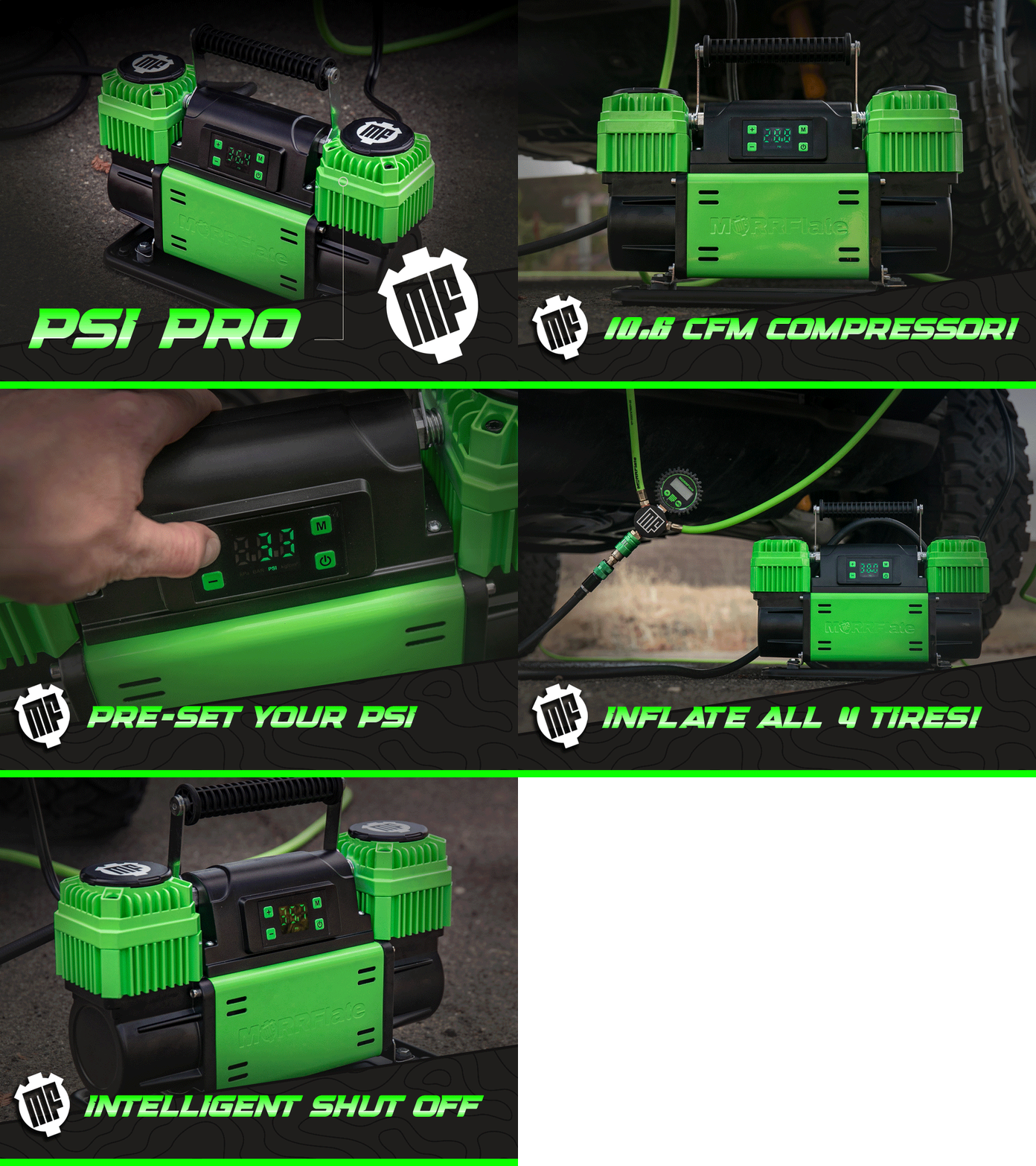
- Tire deflator and portable air compressor
- Waterproof storage for electronics
Source Attribution
Owner's Manual Pages:
- Primary content: Pages 436-438
- Vehicle design characteristics: Page 436
- Safety precautions: Pages 436-437
- Water crossing procedures: Page 438
- Post-drive inspection: Page 438
Additional Sources:
- Toyota USA Newsroom (SDM technical details)
- TacomaWorld.com (community insights)
- Tacoma4g.com (4th Gen specific community)
- Canadian Gearhead (4WD system overview)
Disclaimer:
This guide is derived from the official 2024/2025 Toyota Tacoma Owner's Manual with supplementary information from the owner community and authoritative sources. Always follow your official owner's manual for warranty compliance. This is a reference guide only.
IMPORTANT: Off-road driving involves inherent risks. No amount of equipment or knowledge can eliminate all hazards. Drive within your abilities, assess conditions carefully, and prioritize safety over reaching your destination. When in doubt, turn back.
Last edited by a moderator: