portalhunter
New member
- Joined
- Dec 4, 2024
- Messages
- 24
- Reaction score
- 21
- Location
- Arizona
- Website
- truck.bdigitalmedia.io
- IG Page
- Visit Instagram
- Tacoma
- 2024 Tacoma Trailhunter
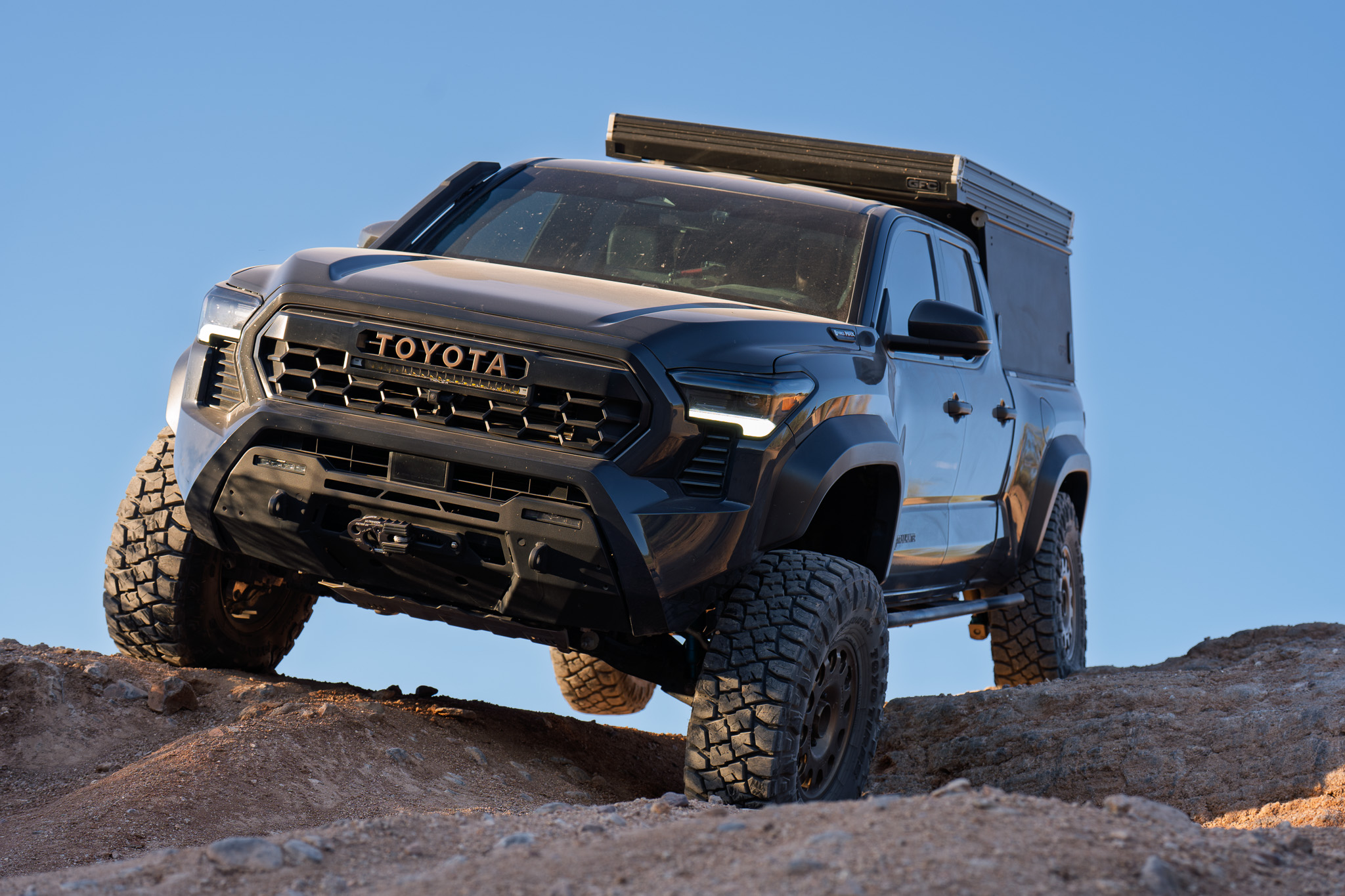
If you think a tune is just about cranking up the boost and making more power, this post might change your mind. I've been running a custom calibration from Cam at CAMTuning Performance on my Trailhunter for thousands of miles and the gap between a proper custom cal and an off-the-shelf map is way bigger than the dyno numbers suggest.
Shelf Tune vs. Custom Calibration
A shelf tune is a generic map developed on one or two trucks and sold to everyone. Better than stock? Yeah. But it's not tailored to your specific mods, altitude, fuel, or driving style.
A custom calibration starts with your data. You flash an initial map, drive, send logs, and the tuner reads exactly how your ECU is responding. Then they revise. Each round tightens the calibration to your specific setup. My Trailhunter with 74Weld portals and 37s needs a fundamentally different tune than a stock TRD Off-Road.
What Actually Gets Rewritten
ECU side:
Hub dyno at SDHQ. Wheel numbers (not crank):
Stock tune: 246 HP / 349 ft-lb torque
Custom calibration: 295 HP / 413 ft-lb torque
Gain: +49 HP / +64 ft-lb
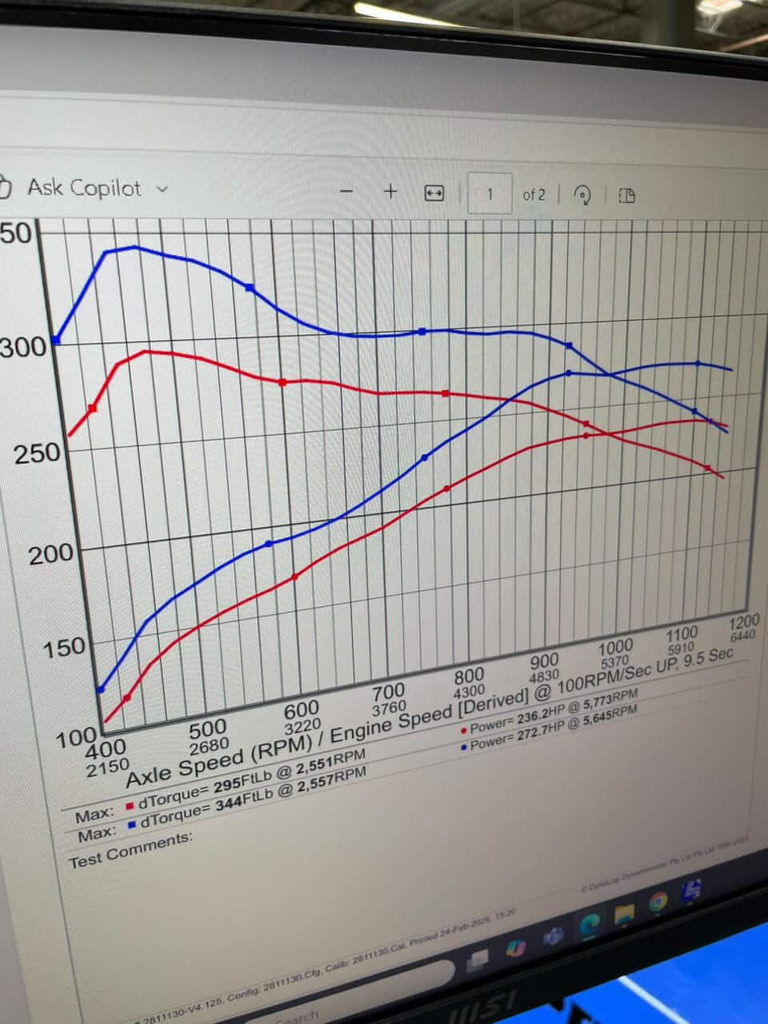
Beyond the raw numbers — torque peak moved from ~2,950 RPM down to ~2,775 RPM. Max torque arrives sooner, exactly what you want on a loaded truck with portals and 37s. The power curve is also broader through the midrange instead of falling off sharply after peak.
About That Throttle Closure Thing
I see this complaint constantly on here. "My throttle closes on its own during acceleration."
Your throttle body isn't malfunctioning — Toyota's ECU is deliberately closing it to keep the drivetrain from grenading itself. When the turbo builds boost faster than the drivetrain can absorb, the ECU steps in. Ford does it on EcoBoost, VW does it on TSI, every modern turbo platform does it.
Toyota engineers tuned everything assuming you'd be towing max payload at altitude in 115 degree heat — so for normal driving, it's way over-restricted. A custom tune refines those thresholds so it happens less often while keeping the same safety margins.
What It Feels Like
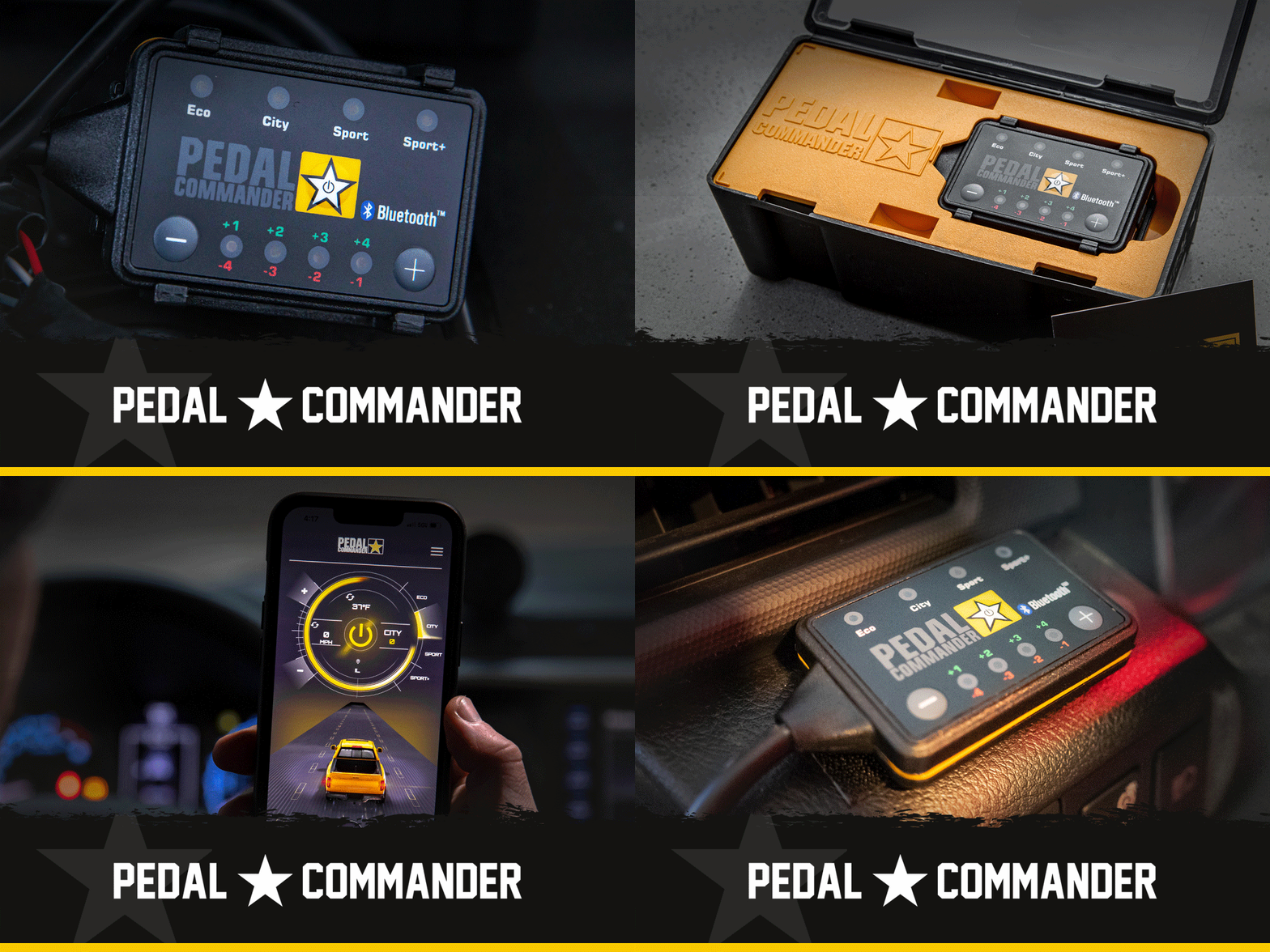
Cam works remotely via the COBB Accessport. Data logs out, revised calibration files back. Takes a few rounds to dial in but worth every iteration.
Anyone else running a custom tune on the i-FORCE MAX? What tuner are you using and what differences are you noticing?
CAMTuning Performance · COBB Accessport
Full writeup with all the details on the blog
@portal.hunter on Instagram
Shelf Tune vs. Custom Calibration
A shelf tune is a generic map developed on one or two trucks and sold to everyone. Better than stock? Yeah. But it's not tailored to your specific mods, altitude, fuel, or driving style.
A custom calibration starts with your data. You flash an initial map, drive, send logs, and the tuner reads exactly how your ECU is responding. Then they revise. Each round tightens the calibration to your specific setup. My Trailhunter with 74Weld portals and 37s needs a fundamentally different tune than a stock TRD Off-Road.
What Actually Gets Rewritten
ECU side:
- Torque model refinement — smooth, consistent delivery without the ECU constantly stepping in
- Fueling strategy — proper air-fuel ratios across all conditions, especially important on the hybrid where the engine cycles on and off
- Variable valve timing — dialed for low-RPM torque and turbo spool
- Knock control — works WITH Toyota's factory sensors, not against them
- Shift scheduling based on real-time load and throttle position
- Firmer, cleaner gear changes
- Torque converter lockup optimization
- Killed the skip-shift and gear hunting on hills
Hub dyno at SDHQ. Wheel numbers (not crank):
Stock tune: 246 HP / 349 ft-lb torque
Custom calibration: 295 HP / 413 ft-lb torque
Gain: +49 HP / +64 ft-lb
Beyond the raw numbers — torque peak moved from ~2,950 RPM down to ~2,775 RPM. Max torque arrives sooner, exactly what you want on a loaded truck with portals and 37s. The power curve is also broader through the midrange instead of falling off sharply after peak.
About That Throttle Closure Thing
I see this complaint constantly on here. "My throttle closes on its own during acceleration."
Your throttle body isn't malfunctioning — Toyota's ECU is deliberately closing it to keep the drivetrain from grenading itself. When the turbo builds boost faster than the drivetrain can absorb, the ECU steps in. Ford does it on EcoBoost, VW does it on TSI, every modern turbo platform does it.
Toyota engineers tuned everything assuming you'd be towing max payload at altitude in 115 degree heat — so for normal driving, it's way over-restricted. A custom tune refines those thresholds so it happens less often while keeping the same safety margins.
What It Feels Like
- Throttle response is instant. The delay between pedal and power is gone
- Transmission is decisive. No more hunting between gears on rolling hills. No lazy downshifts when you need to pass
- Climbing with 37s and portals actually works. The stock cal struggles with the added rotational mass. The tuned cal compensates
- Hybrid system cooperates better. Tuned shift logic keeps the engine in its powerband during climbs, so the battery holds charge under load
Cam works remotely via the COBB Accessport. Data logs out, revised calibration files back. Takes a few rounds to dial in but worth every iteration.
Anyone else running a custom tune on the i-FORCE MAX? What tuner are you using and what differences are you noticing?
CAMTuning Performance · COBB Accessport
Full writeup with all the details on the blog
@portal.hunter on Instagram